

La Caverne du Pont-Neuf

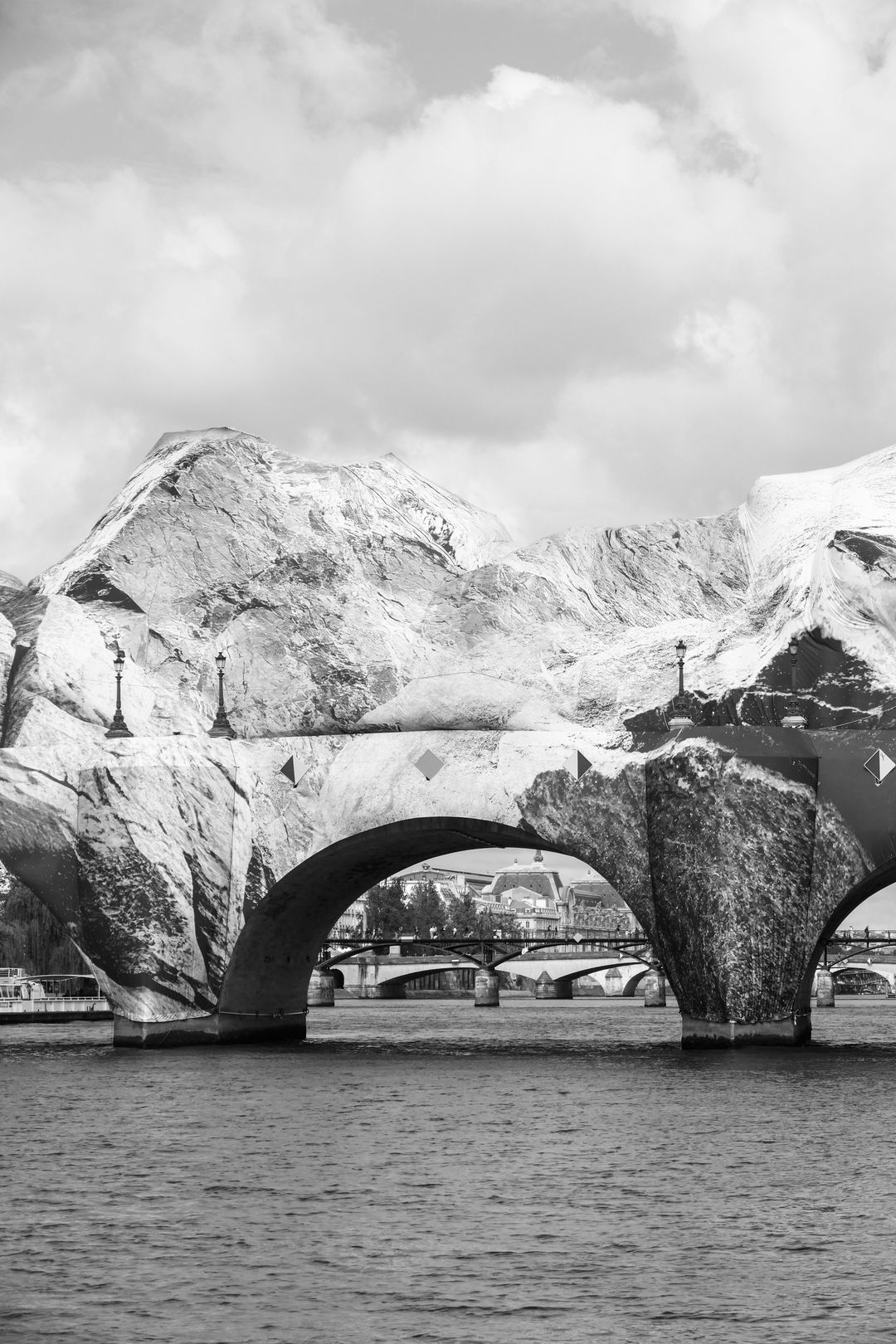
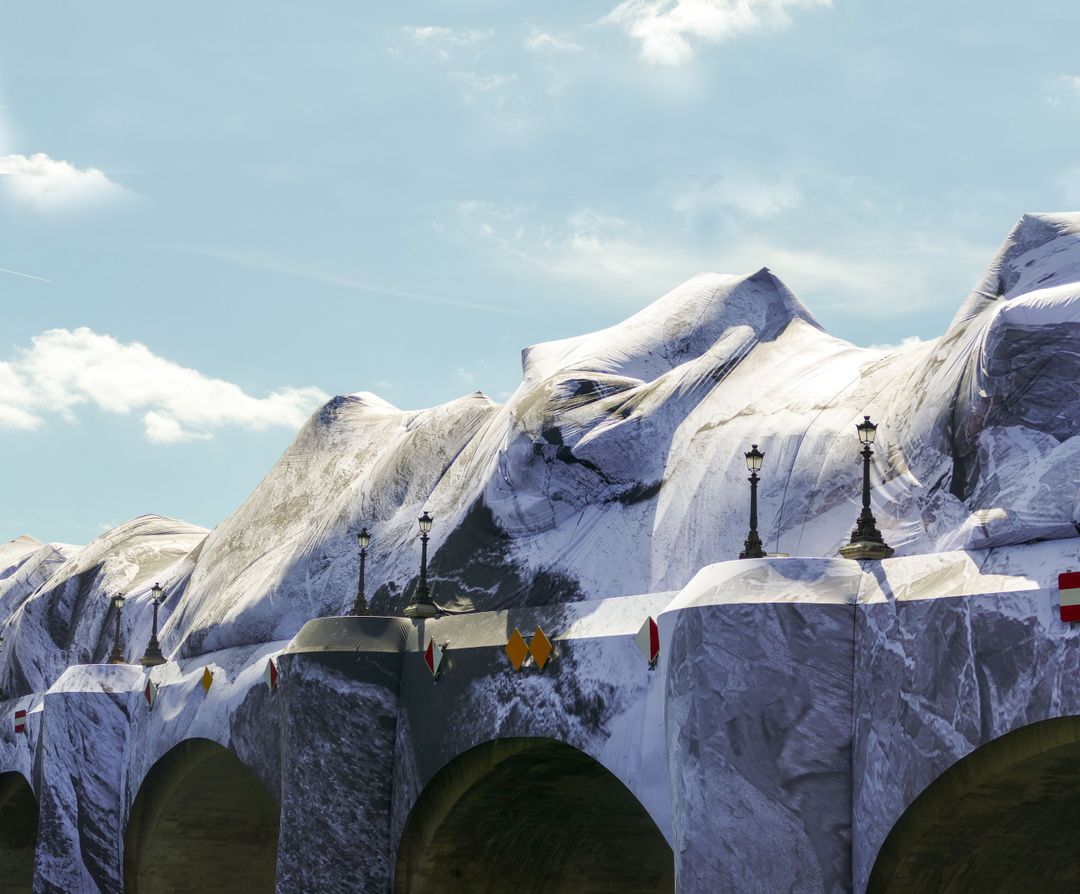
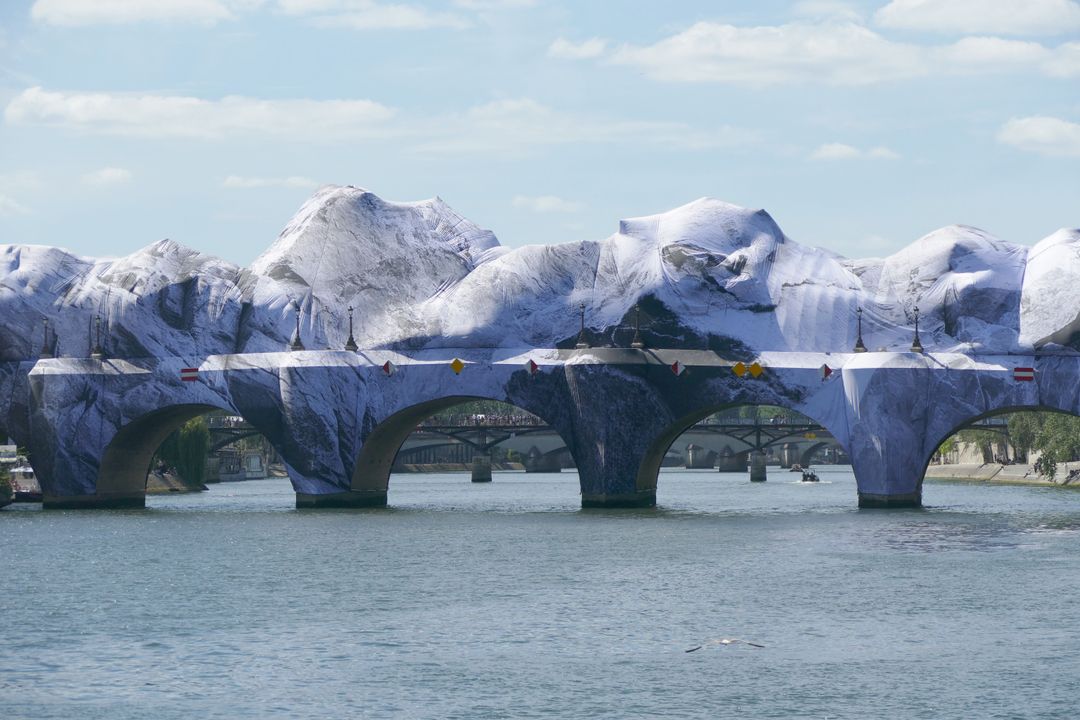
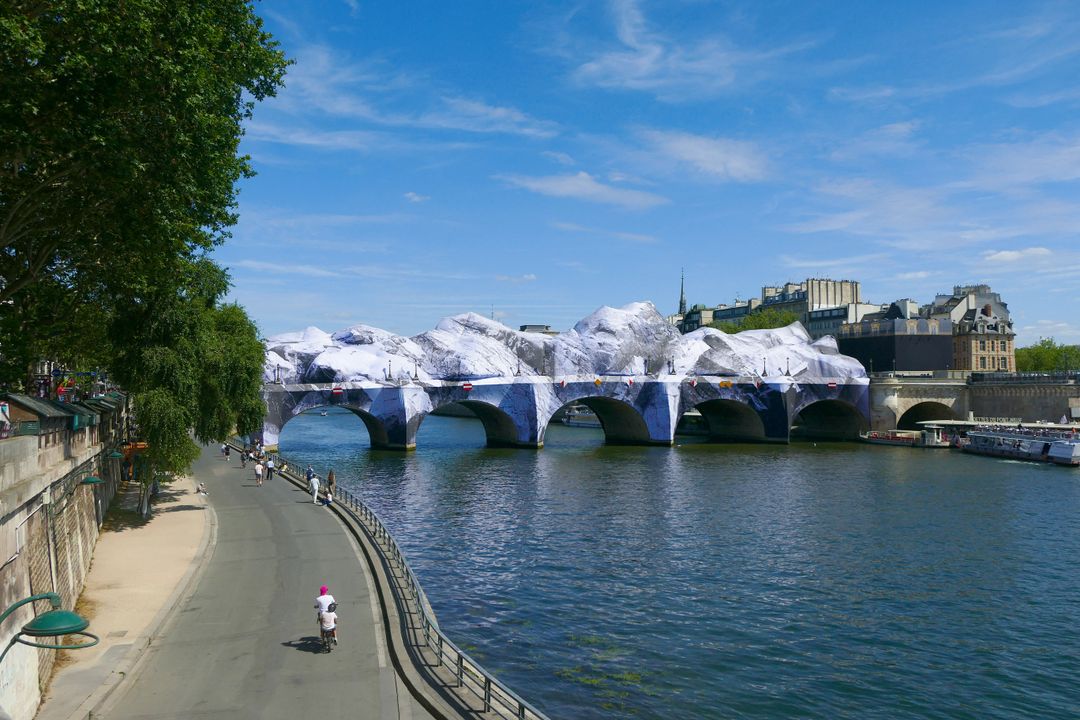
Join us on this walk to discover JR’s spectacular work, La Caverne du Pont Neuf. Open to the public day and night, this temporary installation transforms Paris’s oldest bridge into an immersive 120-metre-long cave.
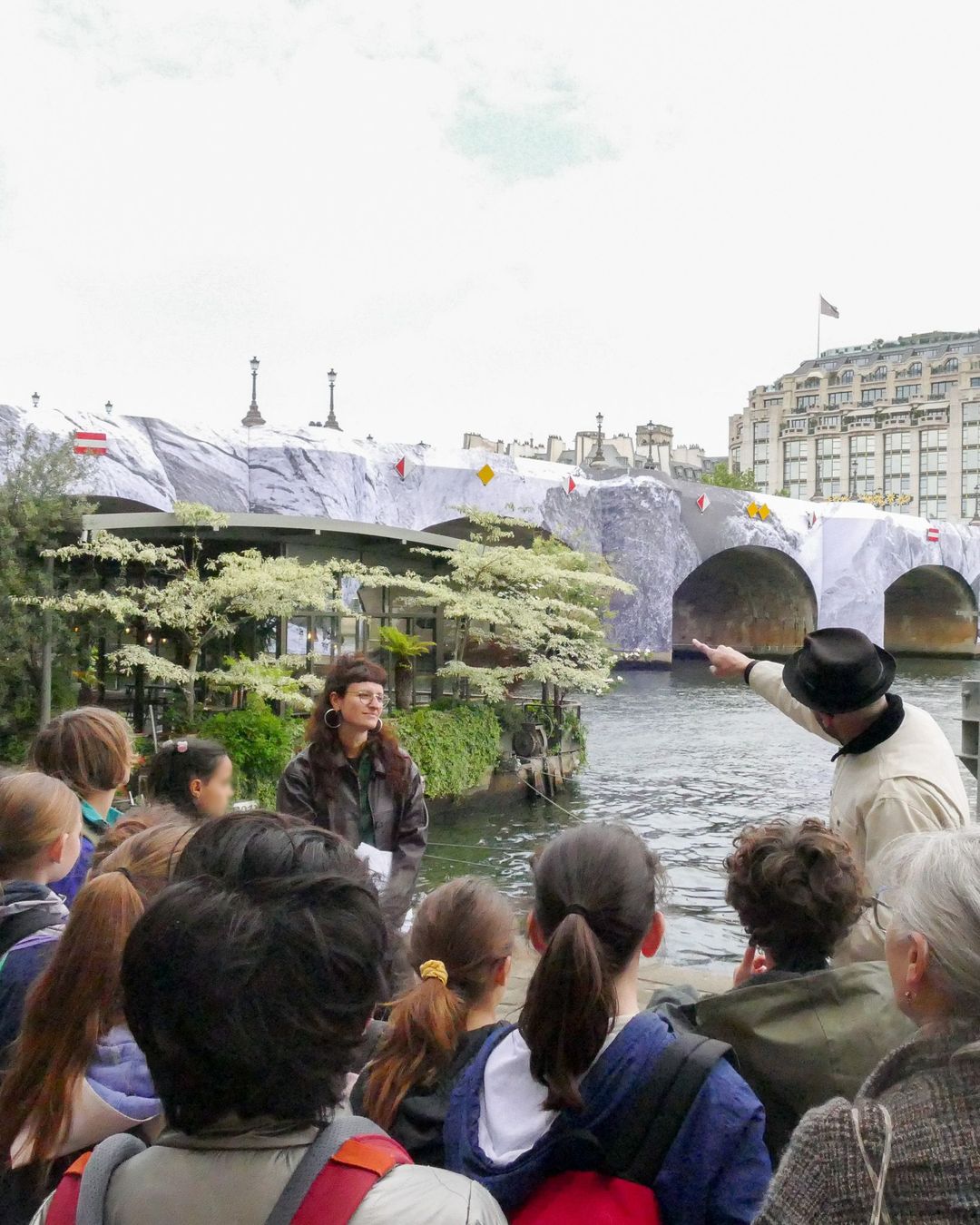
This tour is organised by the Paris Council for Architecture, Urban Planning and the Environment (CAUE). To bring this walk to life, the Paris CAUE ran workshops with Parisian primary schools. The children created their own temporary artworks and drew pictures of their encounters with the various tradespeople who worked on the project.
Here, the Paris CAUE continues its mission to raise awareness of architectural, urban and environmental quality, inviting visitors to take an independent and informed stroll around the artwork, its installation and its surroundings.
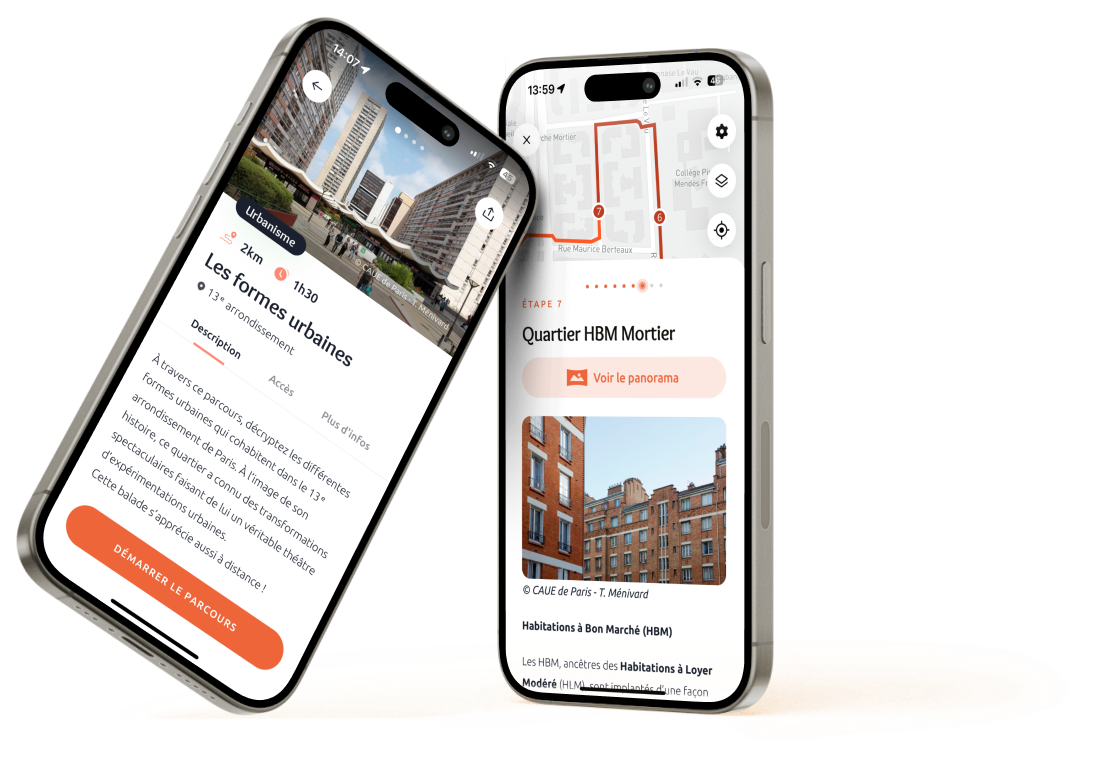
Want to discover the journey ?
For total immersion, download our app and start the journey now!


Journey preview
Place Saint-Michel
 The Place Saint-Michel and its central fountain © Martin Argyroglo
Created in 1855 under the reign of Napoleon III, this square is now known as a hub of student life in the 6th arrondissement, at the heart of Paris’s public transport network.
It offers fine views of Notre-Dame Cathedral and is one of the main access points to the Île de la Cité.
 The construction of the metro station under Place Saint-Michel at the beginning of the 20th century, anonymous © Paris Musées / Musée Carnavalet - Histoire de Paris
In its centre, you can admire the Saint-Michel fountain, built in the 19th century during Haussmann’s modernisation of Paris.
Designed by the architect Gabriel Davioud, who was also responsible for the Théâtre de la Ville and the Théâtre du Châtelet, it was conceived to occupy the corner between the new Boulevard Saint-Michel and Place Saint-André-des-Arts, and to provide a visual outlet for the perspective from the Boulevard du Palais.
 The Saint-Michel fountain in 1917, Charles Lansiaux © DHAAP
Standing 26 meters high and 15 meters wide, this fountain was built to conceal the large gable wall of the buildings situated at the corner of the boulevards Saint-Michel and Saint-André. This urban setting required a monumental feature to emphasise the axes of the two roads leading to the Saint-Michel bridge whilst concealing their misalignment.
 Perspective view of Place Saint-Michel by Gabriel Davioud © Ville de Paris / Bibliothèque de l'Hôtel de Ville
From the outset, several ideas were put forward for the fountain, including a monument dedicated to peace or a gigantic statue of Napoleon I. Ultimately, the theme of the struggle between Good and Evil, embodied by the Archangel Michael slaying the dragon, was chosen and placed at the centre of the composition. Below the fountain, two chimeras spout water.
 Façade of the Peace Fountain project by Gabriel Davioud, 1856 © Ville de Paris / Bibliothèque de l'Hôtel de Ville
The fountain is designed in the style of an ancient triumphal arch: a central span punctuated by four Corinthian columns of red Languedoc marble, topped with bronze statues representing the cardinal virtues: Prudence, Justice, Temperance and Fortitude. It has been listed as a historic monument since 1926.
 Print by Léopold Flameng, taken from the book "Paris qui s'en va et Paris qui vient" © Gallica BNF, département Estampes et photographie
It is rich in references to Antiquity, and the two chimeras flanking it are reminiscent of those at Notre-Dame Cathedral.
🎧 Listen to the testimony of Dominique Massounie (FR), historian and lecturer at Paris Ouest-Nanterre-La Défense University.
 One of the chimeras of the fountain, Hippolyte Blancard, 1890 © Paris Musées / Musée Carnavalet - Histoire de Paris
More content
Place Saint-Michel
The Place Saint-Michel and its central fountain © Martin Argyroglo
Created in 1855 under the reign of Napoleon III, this square is now known as a hub of student life in the 6th arrondissement, at the heart of Paris’s public transport network.
It offers fine views of Notre-Dame Cathedral and is one of the main access points to the Île de la Cité.
The construction of the metro station under Place Saint-Michel at the beginning of the 20th century, anonymous © Paris Musées / Musée Carnavalet - Histoire de Paris
In its centre, you can admire the Saint-Michel fountain, built in the 19th century during Haussmann’s modernisation of Paris.
Designed by the architect Gabriel Davioud, who was also responsible for the Théâtre de la Ville and the Théâtre du Châtelet, it was conceived to occupy the corner between the new Boulevard Saint-Michel and Place Saint-André-des-Arts, and to provide a visual outlet for the perspective from the Boulevard du Palais.
The Saint-Michel fountain in 1917, Charles Lansiaux © DHAAP
Standing 26 meters high and 15 meters wide, this fountain was built to conceal the large gable wall of the buildings situated at the corner of the boulevards Saint-Michel and Saint-André. This urban setting required a monumental feature to emphasise the axes of the two roads leading to the Saint-Michel bridge whilst concealing their misalignment.
Perspective view of Place Saint-Michel by Gabriel Davioud © Ville de Paris / Bibliothèque de l'Hôtel de Ville
From the outset, several ideas were put forward for the fountain, including a monument dedicated to peace or a gigantic statue of Napoleon I. Ultimately, the theme of the struggle between Good and Evil, embodied by the Archangel Michael slaying the dragon, was chosen and placed at the centre of the composition. Below the fountain, two chimeras spout water.
Façade of the Peace Fountain project by Gabriel Davioud, 1856 © Ville de Paris / Bibliothèque de l'Hôtel de Ville
The fountain is designed in the style of an ancient triumphal arch: a central span punctuated by four Corinthian columns of red Languedoc marble, topped with bronze statues representing the cardinal virtues: Prudence, Justice, Temperance and Fortitude. It has been listed as a historic monument since 1926.
Print by Léopold Flameng, taken from the book "Paris qui s'en va et Paris qui vient" © Gallica BNF, département Estampes et photographie
It is rich in references to Antiquity, and the two chimeras flanking it are reminiscent of those at Notre-Dame Cathedral.
🎧 Listen to the testimony of Dominique Massounie (FR), historian and lecturer at Paris Ouest-Nanterre-La Défense University.
One of the chimeras of the fountain, Hippolyte Blancard, 1890 © Paris Musées / Musée Carnavalet - Histoire de Paris
More content
Rue Dauphine
 © CAUE de Paris
The World of JR
The French contemporary artist JR is renowned worldwide for his monumental installations that blend photography, architecture and urban art. His work transforms urban spaces into open-air galleries. Each project is site-specific and tells a social, cultural or political story, often engaging with the collective memory of cities and their inhabitants.
Using huge black-and-white photographs applied directly to walls and monuments, his works play with scale to give new visibility to anonymous people and create a collective, immersive experience of public space.
 Women Are Heroes, Action dans la Favela Morro da Providencia, Favela de Jour, Rio de Janeiro, 2008 © Atelier JR
In Paris, JR transforms iconic locations into spectacular experiences, blending illusion, architecture and public participation. Through eight trompe l’œil installations around the world, several of which are in Paris, JR explores the growing disconnection and isolation of citizens.
- At the Louvre Pyramid in 2016, he created a giant anamorphosis that gave the impression that the pyramid was disappearing into its surroundings. In 2019, he reversed this perception, making it rise from the ground and revealing its underside, through a large-scale collaborative work created with 400 participants.
 JR et le secret de la grande pyramide, Vue de l'anamorphose, matin, Le Louvre, Paris, 2019 © Atelier JR
- At the Trocadéro, with Les falaises du Trocadéro in 2021, he creates the illusion of a vast chasm opening up in the ground opposite the Eiffel Tower.
 Trompe l'oeil, Les Falaises du Trocadéro, 18 Mai 2021, 17h17, Paris, France, 2021 © Atelier JR
- At the Opéra Garnier with Retour à la Caverne in 2023, he transformed the façade into a monumental, immersive cave inspired by Plato’s allegory. The two acts of this latest installation invited the audience to return to a romanticism inspired by the natural world. Retour à la Caverne gradually transforms the façade of the Opéra Garnier into a gigantic cave and then into a stage for the live performance CHIROPTERA.
 Retour à la Caverne, Acte I, 17 septembre 2023, 21h19 © Atelier JR
The work: La Caverne du Pont-Neuf
The immersive and ephemeral installation La Caverne du Pont Neuf transforms the bridge into a monumental cave inspired by the stone quarries from which Paris was built. It offers visitors a sensory journey combining inflatable architecture, visual illusion and augmented reality, inviting them to rediscover this iconic site from a fresh perspective.
 The Pont Neuf Wrapped, Paris, photo : Wolfgang Volz ©1985 Christo and Jeanne-Claude Foundation
A tribute to Christo and Jeanne-Claude's The Pont Neuf Wrapped
JR’s work engages in a direct dialogue with The Pont Neuf Wrapped, created by Christo and Jeanne-Claude in 1985. The Pont Neuf had been entirely covered in fabric, radically transforming the perception of this historic monument and sparking a debate on the role of art in urban space.
 Le Pont-Neuf enrobé, Edith Gerin en 1985 © Paris Musées / Musée Carnavalet - Histoire de Paris
Forty years on, JR has created an experience that invites visitors to step inside the structure. This artistic gesture builds on the vision of Christo and Jeanne-Claude, using the ephemeral to offer a fresh perspective on the familiar. La Caverne du Pont Neuf thus becomes a living tribute, bringing the spirit of The Pont Neuf Wrapped into the present by incorporating contemporary elements such as public participation, sensory immersion and digital technologies.
 Le Pont-Neuf enrobé, Edith Gerin en 1985 © Paris Musées / Musée Carnavalet - Histoire de Paris
More content
Square du Vert-Galant
 From the tip of the Vert-Galant square © CAUE de Paris
An innovative bridge
Standing before you is the oldest existing bridge in Paris. Paradoxically named the “Pont Neuf” (New Bridge), it was inaugurated in 1607 and owes its name to the modernity it embodied at the time. Notably, it was the first bridge in Paris to feature paved pavements, a major innovation that protected pedestrians from horses and mud, thereby facilitating traffic flow and urban life.
 The Pont-Neuf and the Cité, seen from the Quai de Conti by Nicolas Jean-Baptiste Raguenet, in 1772 © Musée Carnavalet, Histoire de Paris
As the first bridge to span the full width of the Seine, directly linking the Left Bank to the Right Bank via the western tip of the Île de la Cité, it forms a key axis of the city and a prime location for traffic and strolls. Unlike older bridges, it eschews wood entirely, being built exclusively from cut limestone sourced from the Lutetian limestones of the Paris Basin, commonly known as ‘Paris stone’, which is also used in many of the capital’s monuments.
 Pont-Neuf, shop drawn in 1847, print, Martial, A.-P. (1827-1883), engraver © Passerelles/Bibliothèque Nationale de France
The initial design, entrusted to the architect Baptiste Androuet du Cerceau, envisaged the construction of dwellings on the bridge, as was customary at the time. Cellars were even built into the piers for this purpose. However, Henry IV ultimately chose to make it an open bridge, without houses, offering an open space overlooking the city. Small shops were nevertheless set up in the bridge’s ‘baskets’ before disappearing in the 19th century, just as the cellars were subsequently filled in.
 The mascarons © CAUE de Paris
An artistic and technical heritage
The carved faces you see here are known as mascarons. Although some were replaced in the 19th century due to weather damage, they retain their original spirit. They form a veritable gallery of expressions, combining grotesque figures, theatrical masks and human or mythological faces. Their role is decorative, symbolic (to ward off evil spirits) and cultural, reflecting the Renaissance’s taste for expressiveness.
 La Monnaie, le Pont Royal et le Louvre from the embankment of the Pont-Neuf by Jean-Baptiste Lallemand around 1775 © Musée Carnavalet, Histoire de Paris
Its famous mascarons and the statue of Henry IV serve as a reminder of its symbolic role in the emergence of a modern city, where public space became a central hub for representation, movement and interaction.
The Pont Neuf also played an important technical role in the history of Paris by housing the city’s first water-lifting machine, the Samaritaine pump, which supplied the Louvre district until the end of the 18th century.
 Cadavre exquis © Annette Zaidman elementary school, 10ᵉ arr. - CAUE de Paris
More content
The banks of the Quai de l'Horloge
 From the quai de l'Horloge © CAUE de Paris
The Imaginary World of La Caverne
By transforming the Pont Neuf into a cave, JR overturns our perception of the monument: the rough stone, usually hidden from view, becomes the heart of the experience.
 Panoramic view of Paris in 1588 with the Pont-Neuf under construction, Frédor Hoffbauer, 1840 © Paris Musées / Musée Carnavalet - Histoire de Paris
The cave, the primordial symbol of shelter, revives memories of the Parisian quarries that provided the 17th-century limestone used for the bridge. The work contrasts the natural with the architectural: the urban order is met with a raw, archaic form, inviting us to rethink a city shaped by the exploitation of its resources. The passage becomes an immersion in the very fabric of the city.
La Caverne acts as a contemporary metaphor, echoing Plato’s allegory of the cave.
 JR, projet Pont-Neuf (collage préparatoire) © 2024 Atelier JR
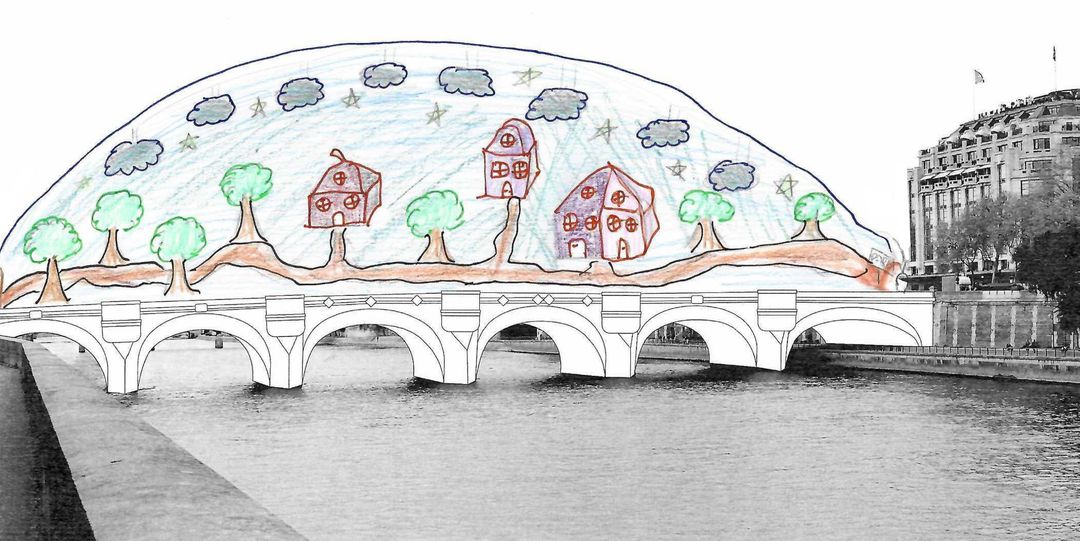
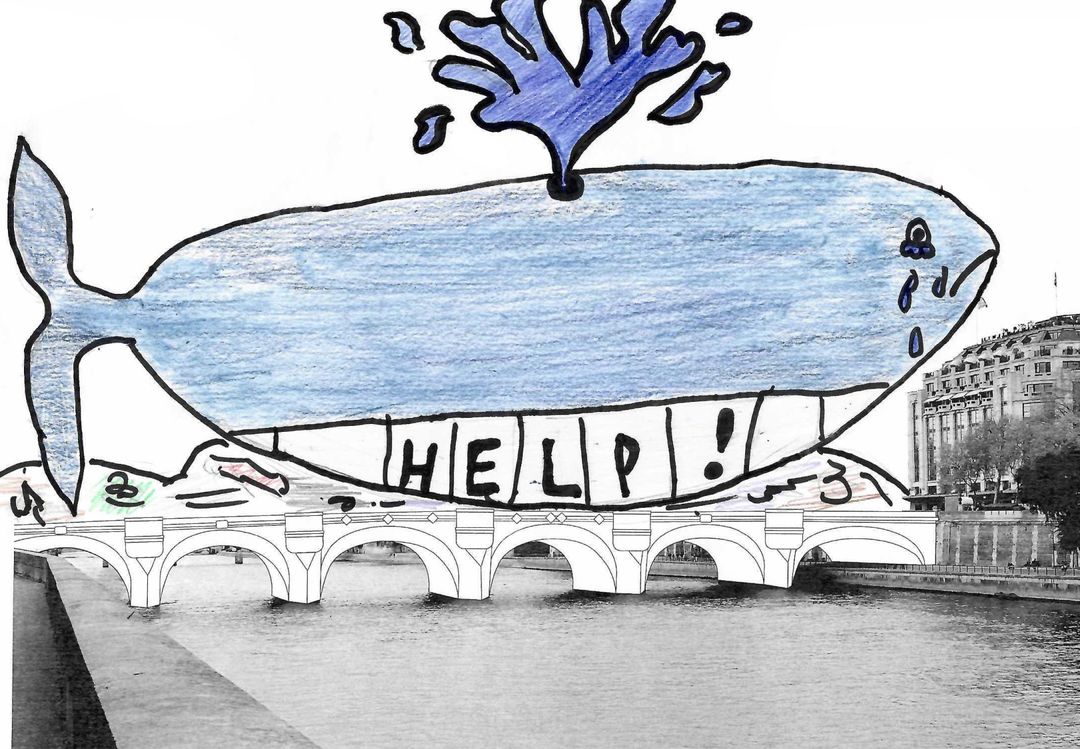
 Imaginary artwork on the Pont-Neuf © Blanche elementary school, 9ᵉ arr. - CAUE de Paris
An immersive experience through augmented reality
While the exterior of La Caverne du Pont Neuf attracts and provokes, the interior offers an equally impactful immersive experience. JR conceives this journey as a symbolic passage into the unknown, where fullness and emptiness coexist. To bring this vision to life, he collaborated with Snap. Together, they developed interactive experiences that extend the physical installation into a digital realm.
 JR during real scale tests of La Caverne du Pont-Neuf in Orly, january 2026, picture : Aristide Barraud © 2026 Atelier JR
Inspired by the work of Étienne-Jules Marey, these features reveal invisible dimensions and enrich the walk-through via smartphone or smart glasses, transforming the experience into a sensory immersion.
The soundscape
For this project, JR is collaborating with Thomas Bangalter, a former member of Daft Punk. Their collaboration follows on from previous projects, such as Retour à la Caverne – Acte II, Chiroptera in 2023, created on the façade of the Opéra Garnier with choreographer Damien Jalet, and the exhibition Dans la lumière at the Perrotin gallery in Paris in 2024.
 JR and Thomas Bangalter, january 2026, picture : Eléa Jeanne Schmitter © 2026 Atelier JR
The composer has sought to envelop the installation in a unique soundscape, based on contrasting textures that are both understated and dense. As a sound artist, Thomas Bangalter crafts an electroacoustic composition that lends the space an almost mineral-like quality.
 Thomas Bangalter, Orly, january 2026, picture : Eléa Jeanne Schmitter © 2026 Atelier JR
More content
Pont au Change
 © CAUE de Paris
Successful full-scale tests
For over a year, JR and his team, in collaboration with the Christo and Jeanne-Claude Foundation and L’Amicale des Ponts de Paris, have been preparing the project with the support of the City of Paris. In January 2026, a large-scale testing phase was carried out in a former hangar at Orly Airport. A 15-metre-high prototype was deployed there for several days to test the technical and artistic aspects of the work, and to fine-tune the structure, cladding, lighting and sound.
 JR, Orly, 2026. Photo : Eléa Jeanne Schmitter © Atelier JR
An engineering feat in the service of a monumental work
The project is based on a large-scale inflatable structure, covering 2,400 square meters, 120 metres long and 20 metres wide, with heights varying between 12 and 18 metres. Air is the main element: it fills 80 fabric arches that give shape to the whole.
 Diagram of the structural principle © Antoine Raveleau, Air Toiles Concept
The structure comprises a double-walled, continuously inflated system, an interior printed tunnel creating an immersive space, and an outer envelope covering the whole. Its construction requires 18,900 square metres of fabric and 20,000 cubic meters of air. This design keeps the total weight to 5 tonnes. With no heavy framework, the ballast is reduced to 130 tonnes, ensuring the stability of the whole structure. Metal gantries are also installed inside to guarantee safety.
800 people working on the project
Numerous trades are involved in the construction of La Caverne du Pont-Neuf. From suppliers to workers, including production and engineering teams, 800 people are involved in bringing the project to fruition.
 Canvas design for La Caverne du Pont Neuf by Air Toiles Concept in Plougoumelen, 2026 © Eléa Jeanne Schmitter / Atelier JR
 Job profile: Augustin, mechanical engineer © Murat elementary school, 16ᵉ arrondissement de Paris - CAUE de Paris
 Job description: Camille, Project Manager at ATC © Blanche elementary school, 9ᵉ arr. - CAUE de Paris
Avant de poursuivre votre découverte de l’œuvre de JR, intéressons-nous au Pont au Change, juste sous vos pieds.
A bridge between defence and traffic
In the 9th century, the Pont de Charles le Chauve was built to counter Viking raids and control the Seine. This bridge, which was rather low and featured massive, solid piers, was home to 13 mills. Renamed the Pont-aux-Meuniers, it soon became so congested that traffic could only pass on foot and in one direction. A second bridge was then built upstream: the Pont au Change, intended for public use.
 The bridges of Paris around 1380 © ALPAGE : C. Bourlet, A.-L. Bethe ; D. Gherdevich ; H. Noizet [HN – 2015]
From reconstructions to the current bridge
In 1596, the Pont-aux-Meuniers collapsed under the weight of its mills. Rebuilt and then destroyed by fire in the early 17th century, it took the Pont au Change down with it. The bridge then took on a ‘Y’ shape, which it retained until the 18th century. Rebuilt between 1639 and 1647 to the plans of Jean Androuet du Cerceau, it stood until 1858, when the current bridge was built.
 Enlargement of the facsimile of the 1609 map by François Quesnel. New road map of the city and suburbs of Paris by Jean Alibert, circa 1787. © Bibliothèque nationale de France, département Cartes et plans, GE C-2442. Numérisé sur Gallica
 © CAUE de Paris
More content
Rue du Pont-Neuf
 © CAUE de Paris
A lightweight structure with minimal environmental impact
Air takes centre stage at La Caverne du Pont Neuf, resulting in a minimalist project that fits within a model of responsible temporary construction.
The lightweight nature of the inflatable structure significantly reduces the amount of materials required compared to a traditional structure. As no foundations are required, there is no need to interfere with the bridge’s historic heritage. Maintenance is minimal thanks to its self-sustaining operation throughout the three-week exhibition period.
This choice also limits the impact of transport: the compressible materials fit into just a few lorries, whereas a conventional structure would have required dozens of articulated lorries.
 Canvas design for La Caverne du Pont Neuf by Air Toiles Concept in Plougoumelen, 2026 © Eléa Jeanne Schmitter / Atelier JR
 Preparatory studies for The Cave of the Pont-Neuf. Photo : Courtoisie d'Atelier JR © 2026 Atelier JR
An approach with minimal environmental impact
The simplicity of La Caverne du Pont Neuf is evident right from the design and manufacture of the artwork. All raw materials are produced in Europe, mainly in countries close to France.
The design, printing and production of the canvases are carried out locally in France, using traditional craftsmanship, with a team of around 25 people.
The material is used across the full width of the rolls, limiting waste to 3–7%. The canvases are printed using water-based inks, free from solvents and toxic substances. Odourless and requiring no special ventilation, they can be used immediately in public spaces.
 Full-scale test for La Caverne du Pont-Neuf, Orly, January 2026, photo : Eléa Jeanne Schmitter © 2026 Atelier JR
Understated technical choices and a planned end of life
The ballast consists of metal sheets that are subsequently reused in the steel cycle. The equipment (lighting, sound, power) is hired, and the energy is supplied by the mains grid, without the use of generators. Immersive elements are kept to a minimum. From 28 June, the artwork will be dismantled. Its future is under consideration: preservation, reuse of materials or recycling. A decision will be announced before the exhibition opens to the public.
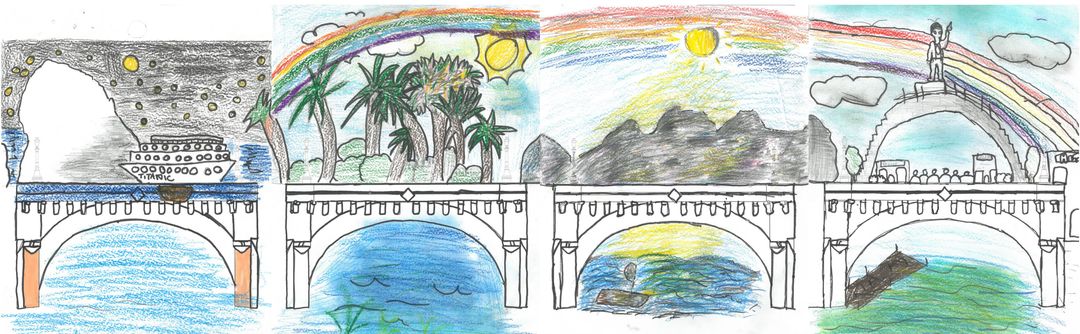
 Cadavre exquis du Pont-Neuf © Annette Zaidman elementary school, 10ᵉ arr. - CAUE de Paris
More content
Pont des Arts
 From the Pont des Arts © CAUE de Paris
Before continuing your exploration of JR's work, let's take a look at the Pont des Arts, right under your feet.
A 19th-century structure
The Pont des Arts was built in the early 19th century at the behest of Napoleon Bonaparte to link the Louvre to the Institut de France. Constructed from cast iron, it was one of the first metal bridges in Paris. Originally, it had nine arches and a toll, which was abolished in 1848. Unlike the old inhabited bridges and mills of the Île de la Cité, the Pont des Arts offers a more unobstructed and sophisticated view of the Seine.
 Pont des Arts © Bibliothèque nationale de France, département Estampes et photographie, RESERVE FOL-VE-53 (H)
 Jean Béraud, A Windy Day on the Pont des Arts, 1880 © The Metropolitan Museum of Art
A weakened bridge
In the 20th century, the bridge was damaged several times by collisions with boats. Weakened by wars and accidents, it was closed in 1977 and then partially collapsed in 1979 after being struck by a barge.
 Fonds « C'était Paris en 1970 » Photographies carrés 721 à 902 © Charles Durler, Ville de Paris BHVP
The reconstruction and legacy of the bridge
The Pont des Arts was rebuilt between 1981 and 1984. The new steel structure retains the general appearance of the old bridge, but with fewer arches to facilitate navigation on the Seine. Part of the original bridge has been preserved: four arches were reassembled in Nogent-sur-Marne, near the Marne, where they can still be seen today.
 La passerelle des arts in Nogent-sur-Marne © CAUE de Paris
 Imaginary artwork on the Pont-Neuf © école élémentaire Murat, 16ᵉ arr. - CAUE de Paris
More content
Quai de Conti
 Imaginary artwork on the Pont-Neuf © Murat elementary school, 16ᵉ arr. - CAUE de Paris
The legacy of inflatable structures: a new artistic and architectural medium
Between the mid-1960s and the early 1970s, artists, architects, engineers and designers embraced inflatable forms as a new medium. Used to design objects, environments or urban projects, these structures redefined the links between architecture, space and the body. They also became symbols of a new way of life, often associated with social and political demands.
 Christo and Jeanne-Claude during the installation of the 42,390 cubic foot package, Minneapolis, 1966. Photo : Carroll T. Hartwell © 1966 Fondation Christo et Jeanne-Claude
Air, the invisible material of Christo and Jeanne-Claude
From the very conception of the project, JR and his team chose an inflatable structure, drawing inspiration from Christo and Jeanne-Claude’s realised and unrealised projects, such as 5,600 Cubicmeter Package (Kassel, Germany, 1967–68), 42,390 Cubic Feet Package (Minneapolis, USA, 1968) and The Walk (project for Doha, 2017), an inflatable walkway that was never realised.
 Installation of a 5,600 cubic meter package (first layer) Kassel, 1968 Photo : Klaus Baum © 1968 Fondation Christo et Jeanne-Claude
Created in 1968 by Christo and Jeanne-Claude, 5,600 Cubicmeter Package is a frameless inflatable structure, held up solely by air pressure. A PVC-coated fabric envelope is continuously pressurised via a ventilation system, allowing the air to give shape and rigidity to the whole structure, without a framework.
 La Promenade (Project for Doha), Collage 2017, Photo André Grossmann © 2017 Christo and Jeanne-Claude Foundation
 Colis de 42 390 pieds cubes, Minneapolis, Minnesota, 1966 Photo : Eric Sutherland, with courtesy from Walker Art Center © 1966 Fondation Christo et Jeanne-Claude
In 1966, at the Minneapolis School of Art, Christo and Jeanne-Claude created an aerial installation based on the use of air and inflated balloons. The structure consisted of four high-altitude research balloons and 2,800 coloured balloons, all inflated and then enclosed in a transparent polyethylene envelope. The whole structure was then inflated using air blowers to form a large pneumatic volume. The work relies on air as an element of form and support; it is the balloons and the air pressure that give the installation its size and lightness.
 Installation of Big Air pack at the Oberhausen gasometer, 2013. Photo : Wolfgang Volz © 2013 Fondation Christo et Jeanne-Claude
 Big Air Package, Oberhausen gasometer, 2013. Photo : Wolfgang Volz © 2013 Fondation Christo et Jeanne-Claude
Designed by Christo and Jeanne-Claude and presented in 2013 in the Oberhausen gasometer in Germany – one of the world’s largest gas storage tanks, standing 117 metres high and 68 metres in diameter –, Big Air Package is a massive inflatable structure installed inside the building. Made from semi-transparent polyester fabric, the work is held upright solely by constant air pressure generated by two fans, without any internal framework. Standing 90 metres tall, it is the largest inflatable structure ever created without an internal framework. Here, air becomes a true architectural material, giving shape to the installation and creating a silent, diffuse atmosphere inside.
 Imaginary artwork on the Pont-Neuf © Murat elementary school, 16ᵉ arr. - CAUE de Paris
More content
Access the journey
 RER
RER
Saint-Michel Notre-Dame (C line)
 Vélib'
Station No. 5033 (Saint-Séverin - Saint-Michel)
Station No. 6020 (Place Saint-André des Arts)
 Metro
Metro
Saint-Michel (line 4)
Odéon (lines 4, 10)
 Bus
Bus
Saint-Michel (lines 27, 58, 70, 87, N12, N13)
Cité (line 4)